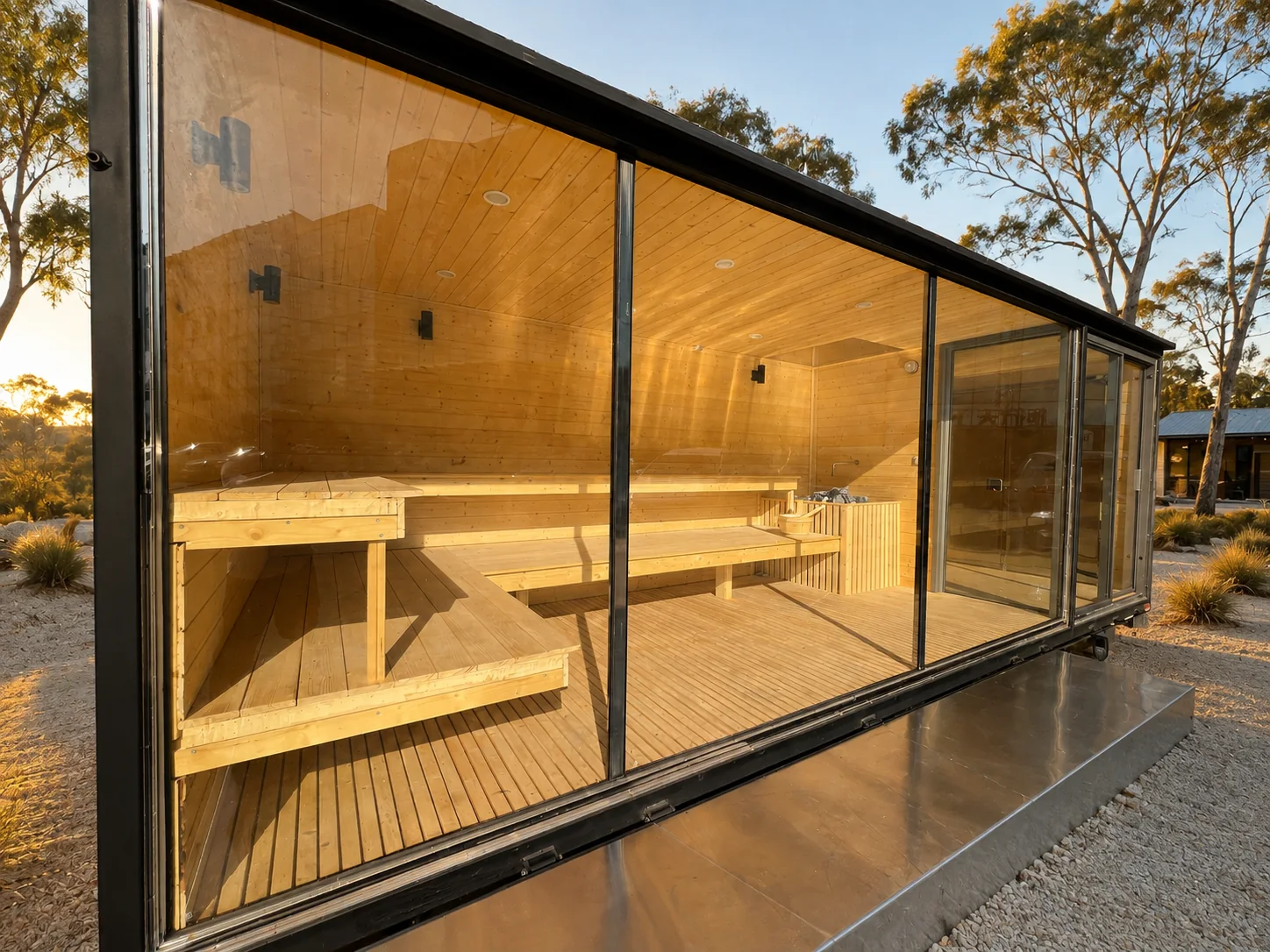
A gym or sports organisation should pre-sell a defined recovery offer, not a vague future facility. Choose one member segment, specify the proposed access model and limitations, calculate realistic timed capacity, and use a waitlist, expression of interest or carefully documented refundable reservation. Investment should proceed only when demand, operations, site, safety, governance and supplier evidence meet written thresholds.
Recovery services can attract strong interest, but interest does not prove that members will pay, attend at workable times or follow a safe operating system. A controlled pre-sale helps separate a popular idea from a viable service.
This guide is general commercial and operational planning. It is not medical, allied-health, legal, financial, safeguarding, approval, engineering, electrical or insurance advice.
Define the member and use case
Choose one primary audience for the test: adult gym members, a club’s senior athletes, supervised team groups, premium personal-training clients or another clearly defined segment. Each group has different timing, supervision, privacy, communication and governance requirements.
Write the proposed job the recovery area performs. It may support a premium membership tier, structured post-training sessions, small-group bookings or a separate paid service. Avoid saying it improves recovery, performance or health unless a specific claim is supported and appropriate for the context.
The gym recovery-area comparison guide can help separate the operational characteristics of sauna, cold-plunge and red-light formats.
Set the pre-sale decision
Decide what evidence would justify the next stage. A practical question might be whether a defined number of eligible members will request a consultation or accept a conditional upgrade at the proposed price while fitting the available schedule.
Set the review period and outcomes in advance: proceed, revise the offer, test a different schedule, reduce the scope or stop. Create separate thresholds for commercial demand, capacity, staffing, safety, governance, site and supplier evidence.
Do not allow a large waitlist to override an impossible timetable or unresolved risk.
Specify the offer precisely
Members need to understand what is being evaluated. State the proposed service type, who may use it, booking unit, access window, supervision model, whether sessions are private or shared, approximate launch stage, price hypothesis and what is not yet confirmed.
Avoid bundling unlimited access into the first test unless the capacity model supports it. “Unlimited” demand can produce queues, peak congestion and member dissatisfaction even when total daily utilisation appears manageable.
If several modalities are being considered, explain whether sauna, cold plunge and red light are alternatives, a sequence or separate services. Each adds operating tasks, contraindication communications, cleaning, supervision and maintenance requirements.
Calculate timed capacity before taking reservations
Build the day from time blocks:
- opening and equipment checks;
- member check-in and orientation;
- session time;
- transition or cooling time;
- exit and circulation;
- cleaning and reset;
- staff breaks and scheduled maintenance; and
- contingency for faults or incidents.
Model peak periods separately from averages. A service can have spare midday capacity and still fail members after work or team training. Use the capacity and guest-flow guide to document bottlenecks and safe buffers.
Publish no capacity figure until the exact product, procedure and venue layout support it.
Select the commitment level
A segmented survey or interview tests language and barriers. A qualified waitlist tests willingness to provide contact details. An expression of interest can record preferred sessions and price acceptance. A refundable reservation may test stronger commitment where the terms are clear and legally reviewed.
Do not describe a waitlist as a sold membership. Do not debit a card automatically when the launch conditions are not satisfied unless the arrangement has been properly designed and communicated.
The ACCC’s supply guidance explains that businesses must not accept payment when they know, or should know, they cannot supply within the promised or reasonable timeframe. Define the refund and communication process before accepting money.
Recruit participants responsibly
Start with eligible people who already have a relationship with the gym or club and whose marketing permissions support the contact. Explain the test purpose, data use and withdrawal pathway.
Australian email and SMS marketing generally requires consent, clear sender identification and a working unsubscribe option. A membership relationship does not make every promotional message exempt. Keep evidence of consent and honour opt-outs.
For clubs, confirm who is authorised to approve the campaign and who owns the participant data. Youth, elite-sport and health-adjacent contexts can introduce additional safeguarding and governance needs; obtain appropriate advice before inclusion.
Build a qualification form
Ask only what is needed to evaluate the offer. Useful fields may include membership status, preferred times, intended frequency, willingness to attend an information session, price response and accessibility needs the organisation is prepared to receive and handle appropriately.
Do not collect medical histories through a marketing form. Establish a separate, professionally reviewed suitability and consent process if the operating model requires health-related information.
Keep analytics free of personal data. Count a completed lead or reservation only when the receiving system confirms it was stored successfully.
Pass the site and operating gates
Review access, floor loading where relevant, placement, ventilation, electrical and water work, drainage, slip management, changing, privacy, emergency access, equipment clearance, cleaning, chemical management where relevant and maintenance access.
Confirm planning, building, electrical, public-health, workplace, accessibility and insurance questions for the exact venue and configuration. A trailer or relocatable pavilion may change the questions, but it does not guarantee exemption.
Use the commercial site-requirements guide and obtain qualified advice before promising operation.
Design the operating system
Prepare opening, member-information, booking, supervision, cleaning, water-quality where relevant, fault, incident and closing procedures. Assign decision authority and escalation contacts. Define when equipment is removed from service.
Train staff for the proposed model and test the workflow before paid use. Safe Work Australia’s plant-risk guidance connects installation, commissioning, operation, inspection, maintenance, transport and storage. Treat the service as a lifecycle, not a room that becomes safe once installed.
Make claims conservatively. Describe facilities and access accurately. Do not promise injury prevention, faster recovery, performance gains or treatment outcomes without appropriate substantiation and review.
Model contribution, not headline revenue
Separate membership income attributable to the offer from existing fees. Include sales discounts, payment costs, cancellations, member pauses, staff time, cleaning, laundry, consumables, utilities, servicing, water treatment where relevant, insurance, booking software, downtime and replacement reserves.
Model conversion and utilisation as ranges. A strong sign-up rate can still produce weak contribution if most members attend during one congested hour or if delivery requires excessive supervision.
The commercial KPI dashboard guide provides a structure for forecast, actual and evidence-quality columns.
Run a controlled information session
Where appropriate, invite qualified prospects to a briefing or demonstration only after the environment and procedures are ready. Explain the proposal, limitations, member responsibilities and current project stage. Capture questions and objections without pressuring participants to commit immediately.
If a demonstration uses a different product or venue, label the difference. Do not imply that the observed experience proves the final configuration’s capacity or performance.
Apply the decision scorecard
Review qualified sign-ups, price acceptance, preferred times, withdrawal reasons, capacity fit, staff workload, site actions, governance approvals, supplier evidence and financial downside. Record gaps as gaps rather than zeros.
A proceed decision should identify the approved offer, maximum membership allocation, booking controls, evidence still required and the event that triggers final commitment. A revise decision should change one major variable at a time so the next test remains interpretable.
Common pre-sale mistakes
- Offering unlimited access before modelling peaks.
- Counting survey enthusiasm as paid demand.
- Mixing athletes, general members and the public in one test.
- Collecting unnecessary health information in a marketing form.
- Promising benefits that are not substantiated.
- Accepting fees before supply and refund conditions are clear.
- Ignoring cleaning, changeover and staff time.
- Treating a relocatable product as automatically approved.
- Reporting a reservation request as completed revenue.
Frequently asked questions
Is a gym waitlist enough to approve the investment?
It is one demand signal. Capacity, price acceptance, attendance behaviour, site requirements, operating workload and supplier evidence also need to pass.
Should the first offer be an unlimited membership?
Usually a controlled booking allocation produces clearer evidence and less congestion risk. The final structure should follow the timed capacity model.
Can a club include junior athletes?
That decision requires appropriate safeguarding, suitability, consent, supervision and professional review. Do not include juniors by default in an adult commercial test.
What counts as a completed pre-sale?
Use the definition in the approved terms. A waitlist, expression of interest, reservation and paid membership are different stages and should be reported separately.
Which recovery modality should be tested first?
Choose the one most closely connected to the member problem, venue capability and operating evidence. Do not add modalities simply to make the offer appear larger.
How can a gym or sports organisation discuss a commercial system?
Share the member group, venue, proposed operating model and timeframe through the commercial enquiry form or call 0432 394 901.
Sources and limitations
- ACCC — Supplying products or services that are paid for
- ACMA — Avoid sending spam
- Safe Work Australia — Managing risks of plant in the workplace
- Australian Government — Identify your target market
This is general commercial and operational planning, not medical, allied-health, legal, financial, safeguarding, approval, engineering, electrical or insurance advice. Confirm responsibilities for the exact venue, users and equipment.
Plan your commercial system
Start with your venue, audience and operating goal.
Tell Mobile Sauna Systems about the proposed site and commercial opportunity so the right questions can be framed for a qualified project discussion.
This article provides general information only and is not medical, legal, planning, engineering or financial advice. Requirements vary by project and jurisdiction. Seek appropriately qualified advice for your circumstances.