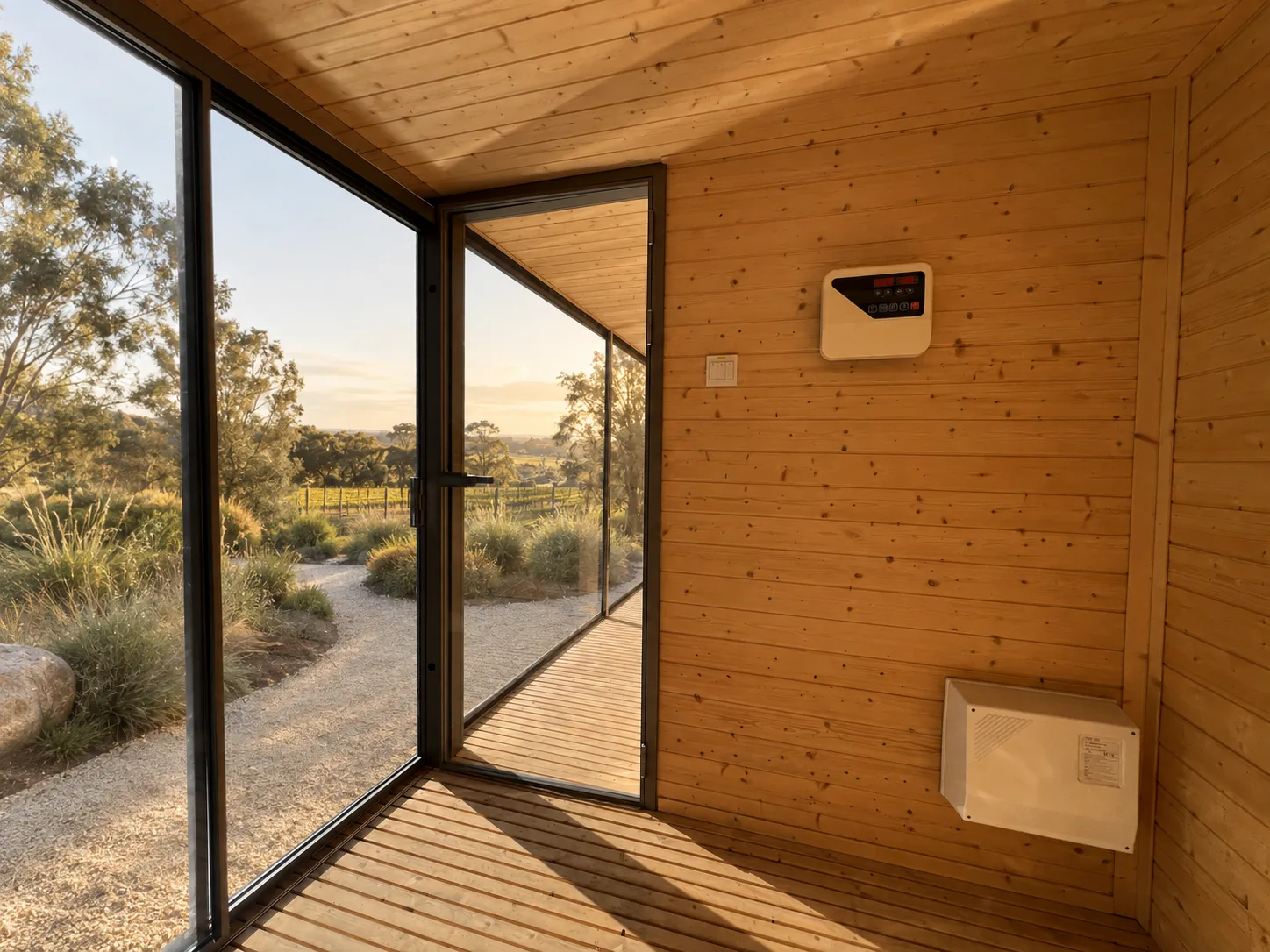
A commercial sauna lifecycle plan should be written before handover and controlled for the life of the system. It should identify the asset and approved documentation, competent-person requirements, pre-start and periodic inspections, cleaning, fault isolation, planned servicing, parts, transport checks where relevant, downtime response, records, change control and replacement criteria. Frequencies must come from approved manufacturer instructions, project-specific advice, legal requirements and operating evidence—not a generic internet checklist.
Maintenance is often reduced to cleaning and an annual service. For a commercial system, that is incomplete. The asset may include a trailer platform, structural frame, glazing, doors, timber surfaces, heater, electrical components, controls, lighting, ventilation and site connections. Each element has a different inspection, cleaning, competence and replacement need.
A lifecycle plan protects the guest experience and makes responsibilities visible. It also helps a buyer compare suppliers: a system that is easy to inspect, document and service may have a stronger operational fit than one with a lower initial price but unclear support.
Start at procurement, not after a fault
Request lifecycle information in the project brief. Ask which components require specialist service, what access is needed, which consumables and spare parts are recommended, how faults are diagnosed, what remote support is available and what happens when a critical part is unavailable.
Require approved versions of drawings, manuals, schedules, certificates, warranties and supplier contacts. Record document dates and model identifiers. Never infer specifications from a photograph or a similar product.
Safe Work Australia’s model Code of Practice for managing risks of plant considers installation, commissioning, operation, inspection, maintenance, repair, transport, storage and dismantling. That lifecycle view is useful even where the final legal classification and duties require site-specific advice.
Build an asset register
Create a controlled register with one line for every maintainable component. Useful fields include:
- asset and component name;
- approved make, model and identifier;
- location;
- supplier and service contact;
- installation and commissioning date;
- responsible owner;
- inspection or service requirement;
- competent-person requirement;
- warranty period and conditions;
- critical spare or lead-time note;
- last action, next due date and evidence link;
- status and unresolved fault.
Avoid recording sensitive credentials in the register. Access codes, keys and private contact data should be managed securely and only made available to authorised people.
Separate user checks from specialist work
The plan should distinguish tasks operators can perform from work requiring a competent technician, licensed electrical contractor, plumber, engineer or other specialist. Staff should never be encouraged to open, alter, bypass or repair equipment beyond their training and authority.
Operator checks may include visible condition, obstructions, door movement, surface condition, lighting, signage, cleanliness and obvious damage—subject to the approved manual. Specialist work may include testing, internal inspection, electrical work, control faults, structural assessment or changes to services.
Write a stop-use rule. If an operator finds cracking, loose elements, unusual odour, overheating, damaged wiring, unreliable controls, water ingress, unstable support or another defined defect, the system should be isolated according to the approved procedure and assessed before return to service.
Use four maintenance layers
Pre-start and between-session checks
These protect daily operation. The checklist should be short enough to complete consistently and tied to a named role. Include the result, time, person and escalation where required.
Planned routine maintenance
Use the approved schedule for cleaning methods, surface care, ventilation, hardware, seals, controls and other components. Record the actual product used, task completed and defects found. Do not introduce a chemical, coating or cleaning method that conflicts with the manufacturer’s instructions.
Periodic specialist inspection and service
Schedule work based on manuals, commissioning documents, operating hours, conditions and professional advice. A high-use coastal or touring system may have different needs from a lightly used pavilion under cover. Calendar intervals alone may be insufficient; operating hours, movements and fault history can matter.
Corrective and improvement work
Every fault should move through a controlled sequence: detect, isolate, record, assess, authorise, repair, test, release and close. Repeated faults should trigger root-cause review rather than repeated temporary fixes.
Integrate cleaning and hygiene
Cleaning is both a guest-facing process and an asset-care process. Define what happens between sessions, daily, weekly and after incidents, using approved materials and methods. Identify high-touch surfaces, benches, floors, handles, change areas and any associated wet zones.
The cleaning record should show completion without collecting unnecessary personal information. If a task is missed, there should be a clear response rather than a back-filled tick.
Where cold-plunge or water systems are included, water quality, filtration, testing, dosing, drainage and public-health requirements become a separate specialist workstream. Do not treat a dry-sauna checklist as sufficient.
Plan for movement and site changes
A mobile or relocatable system needs checks before movement, after transport and after placement. Confirm who can prepare, tow, lift, position, support, connect and recommission the unit. Protect loose items, doors, glazing, equipment and connections according to approved instructions.
After movement, verify position, stability, access, services, damage, controls and documentation before reopening. A previously suitable site approval or risk assessment may not apply to a new location.
Link movement tasks to the delivery and placement readiness checklist so the transport, site and operating records remain connected.
Define downtime response
Downtime affects guest trust and commercial results. Prepare guest communication, booking holds, refunds or rescheduling, staff escalation, supplier contact and safe isolation. Do not promise a repair time unless the service arrangement supports it.
Classify assets by operational criticality. A failed decorative light may allow controlled operation if approved; a heater, control, door, structural or electrical fault may require closure. The decision must come from the approved operating and technical framework, not improvisation.
Keep a small list of critical spares only where storage, shelf life, compatibility and authorisation are understood. Owning a part does not authorise unqualified installation.
Track lifecycle measures
Useful measures include:
- completed inspections versus scheduled inspections;
- overdue actions;
- faults by component and cause;
- mean time to acknowledge and resolve faults;
- planned versus unplanned downtime;
- service and parts cost;
- repeat defects;
- guest sessions affected;
- movement-related defects;
- cleaning failures or corrective actions;
- age and condition against replacement criteria.
Measures should improve decisions, not reward under-reporting. A sudden fall in fault records may indicate better performance—or that staff stopped recording issues.
Create replacement criteria
Replacement planning is not a fixed universal age. Define triggers such as loss of safe function, repeated failure, unavailable parts, excessive downtime, damage, changed requirements, poor serviceability or total cost that exceeds a justified alternative.
Review component and whole-system replacement separately. Preserve evidence for disposal, resale or decommissioning decisions and remove obsolete documents from active use without destroying required records.
Control modifications
No one should add equipment, drill, rewire, change ventilation, alter doors, apply coatings or modify connections without authorisation and review. A change may affect approvals, warranty, structural performance, electrical safety, cleaning or guest use.
Use a change record that states the reason, risk review, drawings and manuals affected, approvals required, person authorising, work completed, testing, training and revised documents.
Common maintenance mistakes
- Waiting for a fault before requesting manuals and parts information.
- Using a copied schedule with no connection to the actual system.
- Allowing untrained staff to investigate technical faults.
- Recording completed work without evidence or defect follow-up.
- Treating cleaning as proof of technical maintenance.
- Ignoring movement, weather exposure and site changes.
- Making unauthorised modifications that may affect safety or warranty.
- Failing to plan guest communication and booking response during downtime.
- Replacing components based only on age instead of condition, support and risk.
Handover checklist
Before commercial operation, confirm the asset register, approved manuals, drawings, certificates, warranties, supplier contacts, inspection schedules, competent-person tasks, cleaning plan, fault process, stop-use criteria, spare-parts plan, staff training, movement checklist, downtime communication and replacement review. Record unresolved items and do not mark the handover complete simply because the unit has arrived.
Frequently asked questions
How often should a commercial sauna be serviced?
There is no responsible universal interval. Follow the approved manufacturer instructions, commissioning documents, applicable requirements, competent professional advice, operating hours, site conditions, movement history and observed defects.
Can staff complete all maintenance tasks?
No. Staff should perform only the checks and care tasks they are trained and authorised to complete. Electrical, structural, control and other specialist work may require competent or licensed people.
What records should a venue keep?
Keep controlled manuals, the asset register, inspections, cleaning, servicing, faults, repairs, tests, staff training, changes, movement and release-to-service evidence, subject to legal and professional recordkeeping advice.
Does cleaning count as maintenance?
Cleaning is one part of lifecycle care. It does not replace technical inspection, planned servicing, fault control or component replacement.
What changes after moving a trailer sauna?
Movement introduces transport, damage, placement, stability, access, service connection and recommissioning checks. The new site may also require fresh authority and professional review.
Can Mobile Sauna Systems help plan lifecycle requirements?
Lifecycle questions can be included in your project brief. Start a commercial enquiry or call 0432 394 901 to discuss the venue and operating context.
Sources and limitations
- Safe Work Australia — Managing risks of plant in the workplace
- ACCC — False or misleading claims
- Mobile Sauna Systems — Commercial operating procedures
This guide is general information and does not replace product manuals, legal duties, licences, engineering, electrical, plumbing, safety, public-health, approval, warranty or insurance advice.
Plan your commercial system
Start with your venue, audience and operating goal.
Tell Mobile Sauna Systems about the proposed site and commercial opportunity so the right questions can be framed for a qualified project discussion.
This article provides general information only and is not medical, legal, planning, engineering or financial advice. Requirements vary by project and jurisdiction. Seek appropriately qualified advice for your circumstances.