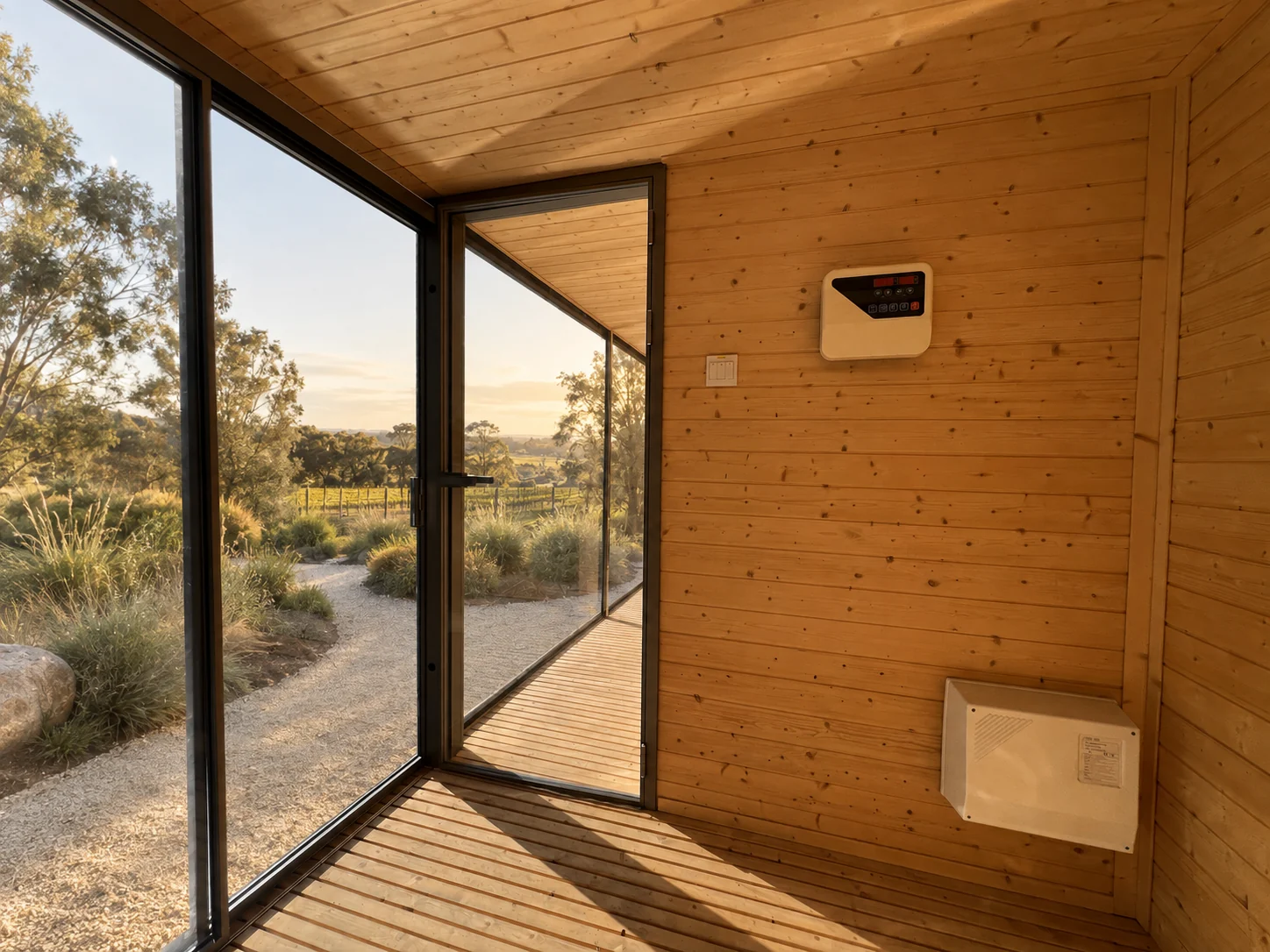
A commercial sauna operating procedure should control the complete session: opening inspection, access, guest information, occupancy, supervision, heat exposure rules, cleaning, faults, emergencies, closing and record keeping. It must reflect the actual unit, site, staff model, manufacturer instructions, insurer requirements and applicable laws. A copied residential guide or waiver is not enough. Build the procedure with qualified advice, train it in realistic scenarios and review it when the equipment, site, audience or incident history changes.
A polished sauna experience feels calm because the operating system behind it is disciplined. Guests see clear information, a clean space and confident staff. They do not see the opening checks, training records, cleaning logs, fault decisions or emergency exercises that make the service reliable.
This guide helps commercial operators structure that system. It is not medical, legal, workplace-safety or emergency advice. The final procedures must be developed for the project with reference to the manufacturer, site, local requirements, insurer and competent professionals.
The operating file should be developed alongside the commercial site requirements and the Western Australian approval checklist in this approval batch.
Assign one accountable operating owner
Name a role—not just a person—responsible for the sauna service. That role controls approved procedures, training, maintenance coordination, incident review and changes. It should have authority to stop sessions when a condition is unsafe or evidence is incomplete.
Create a simple responsibility table covering venue management, session staff, cleaning, maintenance, electrical or other licensed work, booking administration, first aid, privacy and emergency escalation. If a third-party operator runs the experience on another venue’s land, define the boundary contractually. Shared responsibility should not become unowned responsibility.
The operating owner also maintains a controlled document register. Every procedure should have a title, version, approval date, reviewer, next review date and list of related records. Remove obsolete copies from staff areas so yesterday’s instruction is not followed after a system change.
Build procedures around the session lifecycle
Opening inspection
The opening check confirms that the space is ready before heating or guest access. Use the manufacturer’s instructions and project risk assessment to define checks. Typical categories include visible damage, glazing and doors, benches and fixings, floor condition, guards, controls, ventilation, lighting, service connections, emergency access, signage, cleanliness and the area around the unit.
Record faults with a clear decision: acceptable for service, isolated pending assessment, or full closure. Staff should not improvise a repair or override. Define who is competent to inspect technical faults and how the system is prevented from being used while awaiting help.
For a relocatable unit, include placement, levelling or support evidence, access steps or platform, weather impacts and any connection changed since the last operation. A check completed at the previous site does not confirm the new site.
Pre-session access and information
Give guests essential information early enough to make an informed decision. Booking and confirmation messages can explain the experience, expected conduct, what to bring, arrival time, accessibility information, supervision model and how to ask a health-related question.
At check-in, confirm the booking and any venue-specific eligibility process. Do not pressure a guest to disclose unnecessary health information publicly. Set a privacy-respecting escalation route to a qualified professional where needed. A waiver does not replace clear instructions or reasonable controls.
Use plain language. Include maximum occupancy, door operation, communication with staff, prohibited conduct, hydration access, footwear or towel requirements, session timing, how to leave early and what to do if uncomfortable. The precise content and exposure rules must be set with appropriate advice for the actual system and users.
Session control and supervision
Define how a session starts, how time and capacity are controlled, where staff are located, what they observe, and when they intervene. If the service is self-directed, explain how access is restricted to authorised users, how instructions remain visible, how help is summoned and how staff respond.
Do not assume the same model suits every audience. A winery package, gym membership, team session and tourism event may involve different behaviour, alcohol considerations, staffing and emergency access. Document special-event variations rather than letting the procedure drift informally.
Keep an occupancy record where appropriate to the operation and privacy obligations. Make it possible to know whether the space is occupied without relying on memory. Define the rule for late arrivals so capacity or timing is not extended beyond the controlled plan.
Changeover and cleaning
The cleaning procedure should identify products, dilution or preparation, personal protective equipment, timber and surface compatibility, contact time where applicable, tools, order of work, ventilation and drying. Follow equipment and product instructions. Never combine chemicals or use an unapproved treatment because it smells “cleaner”.
Separate quick changeover tasks from daily, weekly and periodic maintenance. A between-session wipe does not replace inspection of hidden areas, ventilation, drains or adjacent wet zones. Record who completed the task, time, faults found and corrective action.
Model the real reset time. If booking intervals leave only five minutes but safe cleaning and inspection require longer, change the schedule. Operational pressure should not rewrite the procedure during a busy shift.
Closing and security
The closing checklist should cover shutdown in accordance with manufacturer instructions, final occupancy confirmation, cleaning, removal of waste and textiles, inspection, fault recording, isolation where required, service and weather checks, security and handover to the next shift.
For external or relocatable systems, include doors, hatches, loose items, access barriers, lighting and site security. If the unit is to move, use a separate relocation checklist. A normal closing procedure does not confirm transport readiness.
Create an emergency and incident framework
Safe Work Australia notes that workplaces require emergency planning appropriate to their risks, including response, evacuation, emergency-service notification, medical help, communication, training and testing. Review the work-environment guidance and confirm the requirements applying to your jurisdiction and venue.
Map plausible scenarios: a guest feels unwell, slips, cannot exit without help, becomes unresponsive, a control faults, power is interrupted, smoke or fire is suspected, severe weather develops, or staff lose communication. For each scenario define the immediate stop, removal from exposure where safe, first-aid response, emergency call, evacuation route, site access for responders, isolation, incident record and authority to reopen.
Post the site address and access instructions where staff can use them under pressure. Test whether emergency services can reach the location and whether gates, event crowds or remote areas create delays. A beautiful secluded position can be an operational constraint.
Train with scenarios, not only signatures. Ask staff to show how they stop a session, open the door, contact help, guide other guests and preserve information for a review. Record the exercise and close any gap.
Control health and marketing language
Separate guest-safety information from sales claims. Staff can explain how to use the experience and when to stop; they should not diagnose, prescribe or promise an outcome outside their competence.
Review website, booking, signage, influencer content and staff scripts together. If a product used in the service is a therapeutic good or medical device, the TGA’s advertising requirements may apply. The TGA states that relevant advertising must be accurate, balanced, not misleading and substantiated, with claims consistent with the product’s intended purpose and regulatory entry where applicable.
Use evidence that matches the actual product, exposure and audience. A study on one population or protocol does not automatically prove a claim for every guest. Prefer descriptive language about the experience and operating format when therapeutic evidence is not established.
Connect maintenance to operating decisions
Build an asset register for the sauna, heater, controls, ventilation, lighting, glazing, doors, benches, guards, access systems and related equipment. Record the manufacturer, model, serial or identity information, documentation location, inspection interval, responsible party and service history.
Define out-of-service criteria. Examples may include damaged glazing, loose components, unreliable controls, blocked access, unresolved electrical faults or missing guards, but the definitive list must come from the project’s competent parties and manufacturer documentation. Staff need a simple rule: when in doubt, isolate and escalate.
Only authorised people should perform maintenance or licensed work. Keep invoices, certificates, test records and replaced-part details. After work, document who confirms the system may return to service and whether procedures or training need updating.
Design useful records
Records should help operate and improve the service, not create a paper burden with no decisions. A practical set may include:
- daily opening and closing checks;
- session or occupancy record where appropriate;
- cleaning and water-management records for associated areas;
- staff training and competency checks;
- faults, isolation and corrective action;
- maintenance, certificates and service reports;
- incidents, near misses and complaints;
- emergency exercise results;
- document changes and approvals; and
- periodic management review.
Protect personal information. Collect only what the process needs, restrict access and set retention rules with privacy advice. Do not place sensitive health disclosures in a general shift log.
Review controls using evidence
Safe Work Australia’s model risk-management code describes identifying hazards, assessing risks where necessary, controlling risks and reviewing controls. Use that cycle whenever the system moves, the operating hours change, a new modality is added, an incident occurs, manufacturer advice changes or staff identify a weakness.
Useful operational measures include checklist completion, faults per operating hour, time to close corrective actions, cleaning exceptions, session delays, incidents and near misses, training currency, guest-rule misunderstandings and unplanned downtime. A low number of incident reports is not automatically success; it can also mean staff do not know what to record.
Review qualitative evidence too. Ask staff where the procedure is hard to follow, which guest instructions cause confusion and what happens at peak time. Observe a full session instead of relying only on a form.
Common operating mistakes
- Using a generic procedure that does not match the installed equipment or site.
- Treating a signed waiver as the primary control.
- Letting staff give improvised health advice or exaggerated sales claims.
- Scheduling changeovers shorter than the documented clean and check.
- Failing to define when the system must be closed and who may reopen it.
- Keeping maintenance documents separate from the operating team.
- Training only at induction and never testing a realistic emergency.
- Reusing a risk assessment after relocation without checking the new site.
- Collecting sensitive information in open or unnecessary records.
- Measuring bookings while ignoring faults, downtime and staff workload.
A practical implementation sequence
Start with verified system documentation and the site risk assessment. Map the session lifecycle and responsibilities. Draft the operating, cleaning, fault, maintenance and emergency procedures. Review them with qualified parties and the insurer. Train staff in the actual space, run a limited opening, record issues and approve the revised version before full operation.
The procedure should be easy to use at the point of work. Keep concise checklists near the task, with the full controlled document available for detail. Mobile Sauna Systems can contribute system-specific information where verified, while the venue and its advisers remain responsible for the complete operation.
Frequently asked questions
Is a waiver enough for a commercial sauna?
No. A waiver may form part of a broader legal process, but it does not replace safe design, guest information, supervision, cleaning, maintenance, emergency planning, training or project-specific controls.
How often should a commercial sauna be cleaned?
The schedule depends on the equipment and materials, session turnover, venue, users and manufacturer instructions. Define between-session, daily and periodic tasks with compatible products and enough time to complete them properly.
What should staff do when equipment seems faulty?
They should follow a documented stop, isolate and escalate process, not improvise a repair. The procedure should name competent contacts and define who may approve a return to service.
Do procedures change when a mobile sauna relocates?
Yes. Placement, access, services, weather, emergency response and surrounding hazards can change. Complete a new site check and update the controlled procedures before opening at the new location.
How should a venue measure guest safety?
Use a balanced set of measures: completed checks, faults, corrective-action time, cleaning exceptions, training currency, incidents, near misses, downtime and observed guest understanding. Review trends and the quality of reporting, not just raw incident counts.
Sources and further checks
Plan your commercial system
Start with your venue, audience and operating goal.
Tell Mobile Sauna Systems about the proposed site and commercial opportunity so the right questions can be framed for a qualified project discussion.
This article provides general information only and is not medical, legal, planning, engineering or financial advice. Requirements vary by project and jurisdiction. Seek appropriately qualified advice for your circumstances.