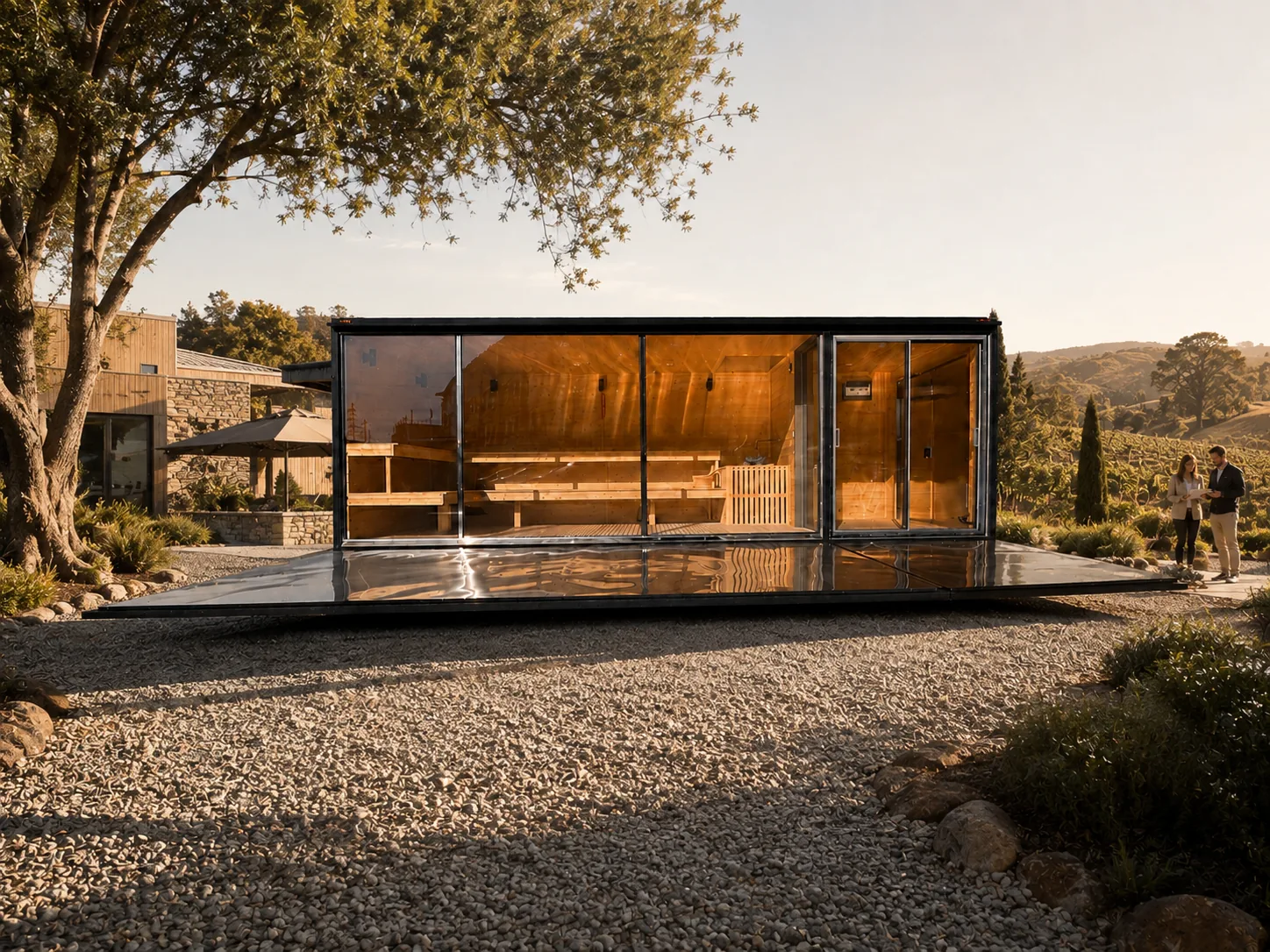
Before ordering a commercial sauna, give the supplier and a licensed electrical contractor one controlled electrical brief. It should identify the exact sauna configuration, heater and controls, documented electrical requirements, proposed location, existing supply, connection route, operating pattern, isolation and protection approach, responsibilities, inspections and commissioning evidence. Do not select a system or promise an opening date from an assumed power requirement.
Electrical work is not a late-stage plug selection. Heater choice, controls, lighting, ventilation, ancillary recovery equipment and the venue's existing load can change the installation scope. A relocatable or trailer-mounted structure may also have different connection, movement and inspection needs from a fixed room.
This guide is general procurement planning, not electrical, engineering, building or legal advice. The supplier must document the offered equipment and a suitably licensed electrical contractor must determine the work and rules that apply at the actual site.
Define the exact configuration first
Start with a configuration identifier, drawing revision and equipment schedule. Record the heater make and model, controls, lights, ventilation equipment, ancillary devices and any cold-plunge, red-light or change-room loads included in the project. If options are still open, prepare a separate schedule for each option rather than blending them into one estimate.
Ask the supplier to state the rated voltage and frequency, phase arrangement, rated input, current information, connection method and any manufacturer requirements for protection, isolation, controls, sensors and clearances. The supplier's evidence should relate to the component actually offered, not a similar brochure model.
Mobile Sauna Systems does not currently publish approved electrical schedules for a standard product range. Project-specific values should therefore remain unconfirmed until an exact configuration and supporting documents are supplied.
Record the venue's site facts
The buyer's brief should identify the proposed location and the current electrical infrastructure. Include the main switchboard location, any relevant sub-board, the approximate cable route, access constraints, proposed connection point, whether the structure will move, and other significant loads operating at the same time.
Photographs can help orientation, but they do not replace an electrical assessment. Ask a licensed contractor to inspect the site and determine whether available supply, switchboard space, protection, earthing, cable route and connection arrangements are suitable. If an upgrade may be required, separate it as a buyer-side allowance until the scope is confirmed.
The commercial sauna site-requirements guide helps combine access, foundations, services and operating needs into the same site record.
Separate continuous use from nameplate information
A component rating is not an operating plan. Tell the electrical contractor how the venue expects to use the system: opening hours, warm-up pattern, likely session turnover, simultaneous equipment, cleaning periods, shutdowns and seasonal peaks. That information helps the project team evaluate demand and operational constraints without inventing a capacity figure.
Do not reduce the brief to “the heater is X kilowatts”. Controls, fans, lighting, pumps or chillers may be separate loads. Starting characteristics and the venue's broader demand also matter. The licensed contractor, not the marketing team, must assess the actual installation.
Clarify fixed, temporary and relocatable connections
State whether the sauna is intended to remain in one position, move occasionally on the property, travel between venues or operate as a road vehicle. Then ask the supplier and contractor to document the connection and disconnection process, who is permitted to perform it, what must be inspected after movement and how unused connections are made safe.
Avoid assuming that “mobile” means an ordinary socket or that a visible connector proves suitability. The correct arrangement depends on the equipment, environment and applicable requirements. A venue should not move or reconnect a system outside the approved operating procedure.
Use the mobile sauna delivery and placement checklist to align electrical access with the delivery route, final orientation and commissioning sequence.
Treat heat, moisture and public access as design inputs
The brief should identify the temperature and moisture environment around electrical equipment, controls, sensors, lighting and connections. Record whether equipment is inside the heated room, in a change zone, outdoors or exposed during cleaning. Ask for documented suitability and installation instructions for each location.
Public and staff access also matters. Identify where isolation, controls, emergency shutdown information and restricted equipment will be located. The operating team needs a clear rule for what guests may touch, what staff may reset and when a fault requires the system to remain closed.
Do not use water around electrical equipment unless the approved cleaning and operating instructions permit it. Cleaning teams should receive the same boundaries as operators.
Allocate responsibilities in writing
A useful responsibility matrix names the party accountable for each item:
- supplier equipment schedule and manufacturer documentation;
- venue site information and access;
- supply-capacity assessment;
- switchboard or distribution changes;
- cable routes, penetrations and reinstatement;
- connection and isolation equipment;
- equipment installation and terminations;
- notices, certificates or records required for the work;
- commissioning and functional tests;
- operator training and handover documents.
Do not accept “by others” without naming the other party and the required completion date. The biggest delays often sit at interfaces: a supplier assumes a site cable is ready while the electrician waits for final equipment data.
In Western Australia, electrical contracting work is regulated. The State's electrical licensing information and guidance on having electrical work done explain the role of licensed electrical contractors. Project parties should confirm the current requirements for their jurisdiction and work type.
Build an evidence register
Create a list of documents required before manufacture, before site work and before operation. Depending on the project, this may include equipment data, installation instructions, drawings, cable and connection details, control logic, inspection records, test results, notices, certificates, commissioning sheets and an as-built schedule.
Mark each item confirmed, outstanding or not applicable. Record its author, revision and approval date. A folder full of documents is not a controlled register if the team cannot identify which revision applies.
During an overseas supplier review, check whether labels and documents match the offered equipment. The China sauna supplier factory-visit due-diligence guide provides a structured way to record evidence without treating a factory demonstration as Australian site approval.
Define commissioning before purchase
The purchase scope should say what successful commissioning looks like. The electrical contractor and supplier should agree the checks within their respective competence. A practical acceptance record may cover installed equipment identity, visual condition, protective and isolation arrangements, control and sensor operation, fault response, operating instructions and the documents handed to the venue.
Do not set acceptance solely as “heater turns on”. The venue needs a safe, documented operating state and a clear defects process. Record who can authorise use, what remains outstanding and whether any limitation applies.
The commercial sauna handover checklist can integrate electrical evidence with cleaning, maintenance, staff training and asset records.
Plan changes and future movement
After handover, changes to the heater, controls, cable route, connection point, venue load or system location may affect the earlier assessment. Add change triggers to the operating file. Before a change, pause, update the configuration record and obtain competent advice.
For a relocatable system, use a movement log. Record location, connection, inspection, faults and release to service. This does not create compliance by itself, but it keeps decisions traceable.
Common mistakes to avoid
- ordering from a verbal power estimate;
- using documentation for a different heater or model;
- treating a connector photograph as proof of suitability;
- forgetting ancillary loads and simultaneous operation;
- leaving supply upgrades outside the budget and programme;
- allowing unclear “supplier versus electrician” boundaries;
- commissioning without a controlled document set;
- reconnecting after movement without the approved process;
- giving operators authority to reset faults they are not trained to assess.
Use decision gates and measurable records
Before deposit, require the exact equipment schedule and unresolved-items list. Before manufacture release, require agreed drawings and interface information. Before site work, require a licensed contractor's confirmed scope. Before operation, require completion records, commissioning status, operating boundaries and training.
Monitor late equipment changes, electrical defects, nuisance shutdowns, warm-up interruptions and unplanned supply work. These measures help improve future specifications. They do not replace mandatory inspections or competent judgement.
Frequently asked questions
Who should prepare the electrical brief?
The buyer can coordinate the brief, but the supplier must provide accurate equipment information and a licensed electrical contractor must assess and perform the site work within their authority. Complex projects may also require engineering, building or other specialist input.
Can a supplier confirm that a sauna will work at my venue?
A supplier can document the offered system's requirements. Suitability for an existing venue also depends on verified site conditions, available supply, other loads, routing and applicable rules. That assessment should not be inferred from supplier marketing.
Does a mobile sauna use a standard plug?
Do not assume so. The correct connection depends on the exact equipment and installation. Ask for documented electrical requirements and have a licensed contractor determine the appropriate site arrangement.
What documents should arrive at handover?
The project-specific list may include equipment data, installation instructions, as-built information, inspection and test records, required notices or certificates, commissioning results, operating instructions and fault contacts. Agree the list before purchase.
Should electrical work be included in the sauna quote?
It can be included or buyer-managed, but the boundary must be explicit. Compare quotes using the same responsibility matrix and identify allowances, exclusions and site-dependent work.
What should I do before requesting a proposal?
Prepare the configuration, site facts, operating pattern and responsibility questions, then involve a licensed contractor early. To discuss a project-specific procurement brief, contact Mobile Sauna Systems or call +61 432 394 901.
Sources and limitations
This guide uses general procurement principles and official Western Australian electrical-licensing guidance. Requirements vary by jurisdiction, system and site. Confirm current obligations with the relevant regulator and competent licensed professionals. Mobile Sauna Systems has not published a standard electrical specification, so no product load or connection claim is made here.
Plan your commercial system
Start with your venue, audience and operating goal.
Tell Mobile Sauna Systems about the proposed site and commercial opportunity so the right questions can be framed for a qualified project discussion.
This article provides general information only and is not medical, legal, planning, engineering or financial advice. Requirements vary by project and jurisdiction. Seek appropriately qualified advice for your circumstances.