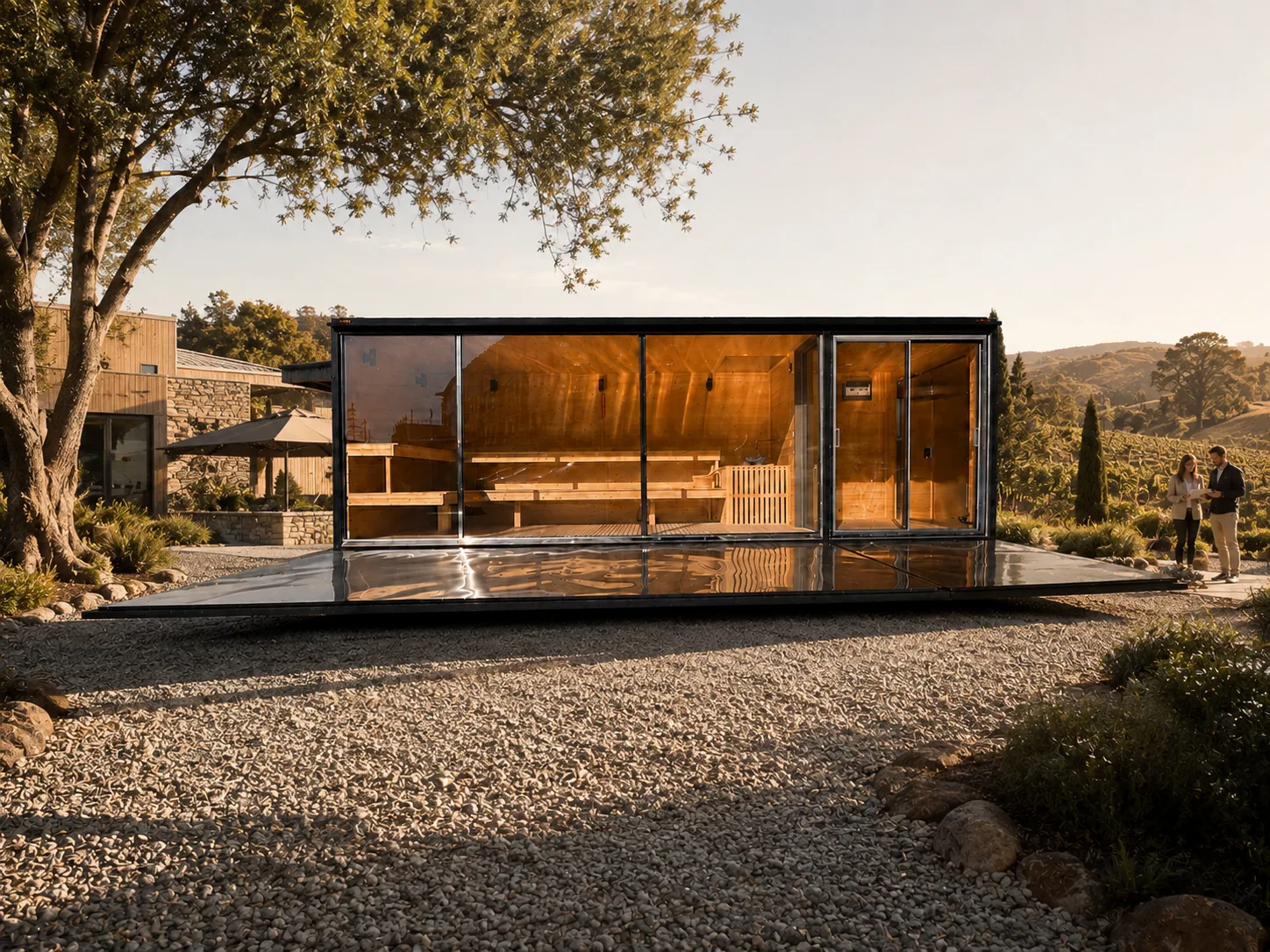
Compare commercial mobile sauna proposals against the same written brief and the same evidence rules. Score site fit, confirmed inclusions, approval responsibilities, operating requirements, delivery and commissioning, documentation, warranty and service, lifecycle cost, assumptions and exclusions. Keep price visible, but do not let an incomplete low price outrank a proposal that makes the total project scope clear.
A supplier scorecard is a decision tool, not a substitute for technical, legal, planning, building, electrical, accessibility, insurance or financial advice. Its purpose is to stop unlike proposals being treated as if they were equivalent. One supplier may include delivery, commissioning and operator training; another may quote only the physical unit. Unless the buyer normalises those differences, the headline price can be misleading.
The scorecard should be created before final proposals arrive. That keeps the evaluation aligned with the venue’s actual objectives rather than the strongest sales presentation.
Start with a common project brief
Issue every shortlisted supplier the same dated brief. Include the venue type, intended users, proposed site, access measurements, known utilities, operating concept, expected movement between sites, client-supplied works and the decision timetable. Clearly label unverified information as an assumption.
Ask suppliers to return the brief with exceptions marked. If a supplier changes an assumption, record the change in a clarification log and give other suppliers a fair opportunity to respond where appropriate. The existing commercial project brief guide explains the minimum inputs.
Use pass-or-stop gates first
Some issues should not be averaged into a score. Create pass-or-stop gates for matters the venue cannot responsibly compromise:
- proposal identifies the exact product or configuration being offered;
- dimensions, mass, capacity and utility requirements are supported by approved documentation;
- site access and placement constraints have been addressed;
- responsibilities for approvals and competent professional advice are explicit;
- delivery, commissioning, handover and operator documentation are defined;
- warranty, exclusions and service contact are supplied;
- material claims can be substantiated;
- the proposal does not imply that a trailer format automatically removes site or regulatory obligations.
A failed gate does not always mean permanent rejection. It may mean “clarification required” or “do not proceed until evidence is supplied”.
Score fit for the intended use
Ask whether the proposal answers the actual commercial problem. A winery may need a premium guest journey that integrates with bookings and hospitality. A sports organisation may value supervised group flow and recovery-area coordination. A wellness entrepreneur may need a relocatable operating model with practical storage, transport and set-up.
Score the fit against written criteria:
- target guest or member experience;
- proposed session and staffing model;
- compatibility with the site and movement plan;
- integration with changing, cooling, privacy and amenities;
- ability to operate during peak periods;
- evidence for claimed capacity or performance.
Do not invent a universal weighting. The buyer should document why each criterion matters to this venue.
Compare site and utility scope
For each proposal, identify what has been verified, assumed, excluded or left for the client. Compare approach route, turning and placement requirements, stable support, electrical supply, water and drainage where relevant, lighting, security, weather exposure, emergency access and maintenance access.
Use the commercial site-requirements guide and delivery-readiness checklist to frame questions. Site-specific conclusions still belong to the relevant authorities and competent advisers.
Normalise the scope and price
Create a comparison table with one row for every material workstream and one column per proposal. Use four labels: included, excluded, provisional and unclear. Typical rows include:
- site survey and measured access review;
- drawings and approved product documentation;
- transport, permits and traffic management where required;
- ground or support preparation;
- electrical and plumbing work;
- delivery, placement and set-up;
- testing, commissioning and training;
- manuals, cleaning procedures and maintenance schedules;
- warranty response and replacement parts;
- insurance and approval dependencies;
- taxes, travel, accommodation and contingency.
Then calculate a normalised comparison range using only documented figures. Do not manufacture costs for missing items. Mark them “price required” and treat the uncertainty as a decision risk.
Evaluate evidence quality
Important claims should link to evidence. Ask for current drawings, manuals, warranty wording, licences where relevant, certificates or test reports, photographs of the actual system and references the supplier is authorised to provide. Concept visuals should be labelled as concepts, not completed installations.
The ACCC’s advertising and promotions guidance explains that claims should be true, accurate and based on reasonable grounds. Apply the same standard to claims about compliance, delivery, capacity, performance, customer results and commercial returns.
Review delivery, movement and handover
If the unit will travel, the scorecard must distinguish its transport configuration from its operating configuration. Ask who confirms vehicle compatibility, mass, dimensions, restraint, route, permits, driver requirements and pre-departure checks for each movement.
The National Transport Commission’s Load Restraint Guide says transported loads must be safely loaded, properly restrained and within relevant limits. Exact obligations vary by vehicle, jurisdiction and movement. Require qualified advice rather than treating a generic checklist as approval.
The handover score should cover commissioning records, operator training, emergency and fault procedures, cleaning, inspection and maintenance schedules, spare parts, warranty contacts and the evidence pack retained by the venue.
Assess operating and lifecycle support
A proposal can be attractive on delivery day but difficult to operate. Compare staffing assumptions, booking controls, supervision, turnaround, cleaning access, consumables, planned downtime, service response, inspection frequency and replacement planning.
Safe Work Australia’s model code for managing risks of plant considers the equipment lifecycle, including installation, operation, inspection, maintenance, transport, storage and dismantling. The supplier response should make ownership of these tasks visible.
Record risk, confidence and dependencies
Give each score a confidence rating: verified, supported, provisional or unverified. A high numerical score based on weak assumptions should not appear stronger than a slightly lower score supported by evidence.
Maintain a dependency register covering site approvals, utility upgrades, landlord consent, professional sign-offs, delivery access, insurance, staffing and supplier lead times. Assign an owner and next action to each dependency.
Make the decision traceable
Have at least two appropriate reviewers score independently, then discuss differences. Record the reason for the final selection, outstanding conditions and the documents relied on. A valid outcome may be proceed, seek clarification, pilot, revise the brief or stop.
Keep commercially sensitive scoring private. Public content should not publish supplier allegations, confidential prices or unsupported comparisons.
Common proposal-comparison mistakes
- Comparing headline prices before normalising scope.
- Giving presentation quality more weight than documented site fit.
- Accepting capacity, compliance or return claims without evidence.
- Assuming all approvals are included because they are not listed as exclusions.
- Ignoring transport, commissioning, training and lifecycle service.
- Scoring unknown information as zero rather than requesting clarification.
- Changing weightings after seeing a preferred proposal.
- Treating the highest total as automatic approval despite a failed gate.
A practical scorecard structure
Use a 100-point model only after pass-or-stop gates are satisfied. A venue might allocate points across business fit, site fit, operating model, evidence, delivery and handover, lifecycle support, commercial clarity and risk. Document the selected weights and require a written comment for every score.
The scorecard should end with conditions precedent: the exact evidence or approvals required before contract, manufacture, delivery or operation. It supports governance; it does not certify the project.
Frequently asked questions
Should the cheapest commercial sauna proposal win?
Not automatically. Compare normalised scope, evidence, exclusions, site fit, operating requirements and lifecycle support. An incomplete price can create later cost and risk.
What if supplier specifications are different?
Return to the required outcome and site constraints. Compare each configuration against the same brief, then ask for approved documentation and explanations for material differences.
Can we score approvals as included?
Only when the proposal names the approval work, responsible party, deliverable and exclusions. Site and regulatory responsibilities should be confirmed with relevant authorities and advisers.
How should unknown costs be handled?
Label them as price required or provisional. Do not insert invented figures. Evaluate the uncertainty and request clarification before a binding decision.
Who should review the proposals?
Include the commercial sponsor, operator and site or facilities representative, plus competent advisers for technical, approval, accessibility, insurance or legal matters as needed.
What happens after a preferred supplier is selected?
Resolve conditions and assumptions, confirm the exact scope, document approvals and evidence, and plan commissioning and handover. To discuss a commercial brief, start an enquiry or call 0432 394 901.
Sources and limitations
- ACCC — Advertising and promotions
- Safe Work Australia — Managing risks of plant in the workplace
- National Transport Commission — Load Restraint Guide
- Australian Government — Do market research
This is a procurement framework, not legal, engineering, planning, safety, financial, medical or insurance advice. Requirements depend on the product, site, jurisdiction and operating model.
Plan your commercial system
Start with your venue, audience and operating goal.
Tell Mobile Sauna Systems about the proposed site and commercial opportunity so the right questions can be framed for a qualified project discussion.
This article provides general information only and is not medical, legal, planning, engineering or financial advice. Requirements vary by project and jurisdiction. Seek appropriately qualified advice for your circumstances.