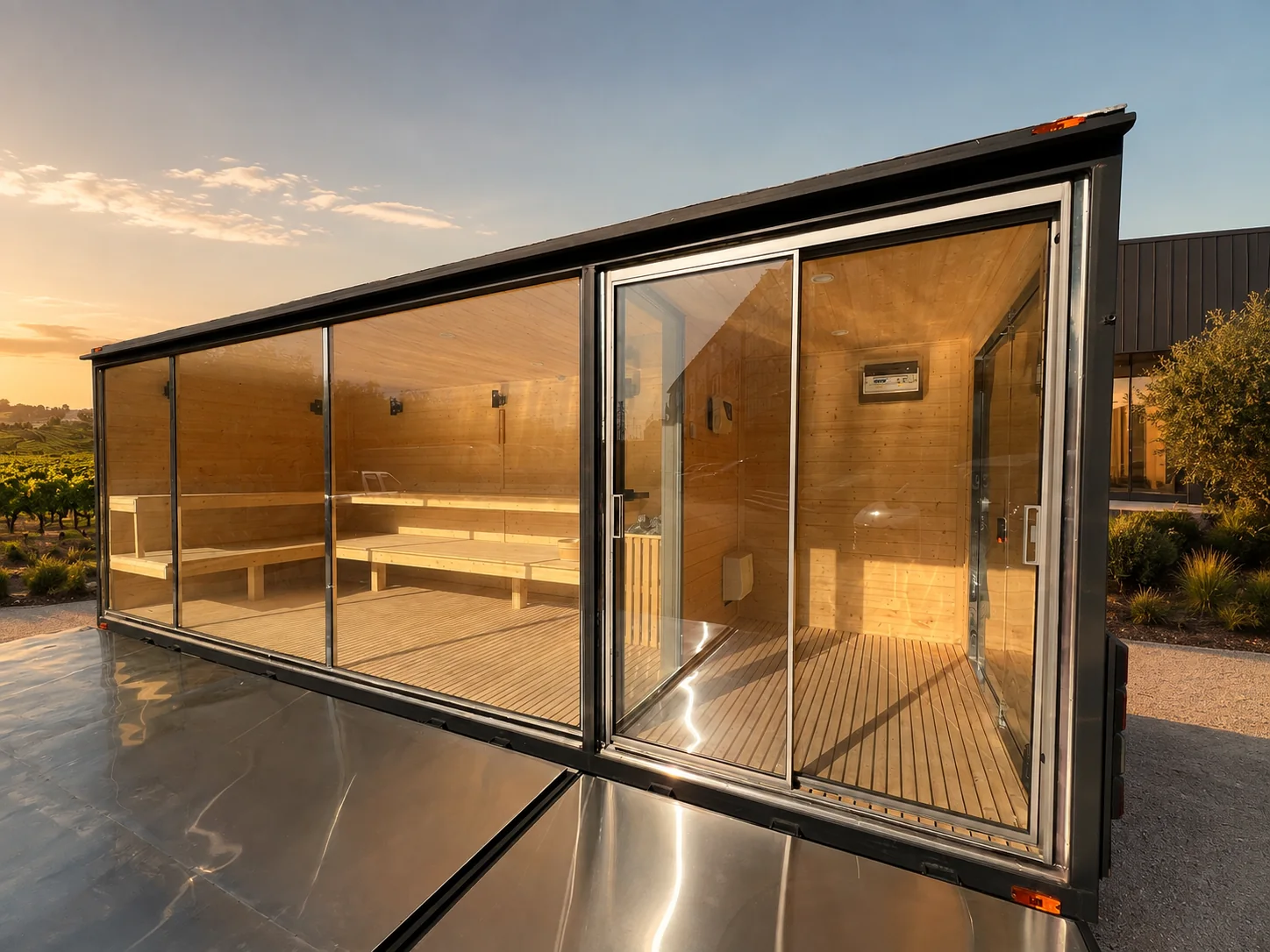
A responsible commercial mobile sauna pre-sale begins with a narrow buyer segment, a written offer, a clear boundary between confirmed and provisional information, and a commitment method matched to the evidence available. Start with qualified conversations and non-binding expressions of interest. Accept money only under documented terms that explain what is being reserved, the refund position, the conditions that must be satisfied, and the realistic supply window.
Pre-selling can test whether Australian venues and operators will move beyond curiosity, but it is not a shortcut around product verification, consumer law, importing, site suitability or professional advice. The aim is to learn which buyers are credible, which specification matters most and what evidence is required before a binding sale.
This guide is general commercial-planning information. It is not legal, financial, tax, approval, engineering, vehicle-compliance or insurance advice.
Decide what the pre-sale must prove
Write the decision before creating the offer. A useful question is not “Does anyone like the concept?” It is “Will a defined type of Australian commercial buyer progress through qualification and accept a documented reservation pathway at the proposed value?”
Set evidence levels. An enquiry shows contact intent. A completed qualification call shows stronger engagement. A written expression of interest shows willingness to continue. A refundable reservation can show greater commitment, but only when the conditions and refund mechanics are unambiguous. A final purchase contract belongs after the offer, specification, delivery and responsibility boundaries are sufficiently defined.
Choose a review date and possible decisions: proceed to supplier negotiation, revise the specification, test another segment, or stop. This protects the project from treating activity as validation.
Choose one founding-partner segment
Commercial buyers evaluate different outcomes. A winery may prioritise a bookable guest experience and landscape fit. A gym may prioritise member flow, supervision and changeover. A wellness entrepreneur may prioritise transport, site access and a repeatable operating model.
Begin with the group for which the current concept solves the clearest problem. Describe the buyer by venue type, location, existing audience, intended use, decision authority, site readiness and approximate timeframe. Avoid a campaign aimed at “everyone interested in wellness”, because its response will be difficult to interpret.
For a broader demand-testing method, use the mobile sauna business pilot guide. For venue-specific feasibility, use the accommodation sauna workbook.
Build the evidence register
Create a table with three columns: confirmed, provisional and buyer-specific. Confirmed facts may include the brand, commercial positioning and the visible design shown in approved photographs. Provisional items may include final dimensions, weight, utilities, inclusions, delivery timing, approvals, warranties and landed price until the supplier and responsible advisers verify them.
Buyer-specific matters include site access, local approvals, connection work, insurance and operating procedures. They cannot be promised universally. Every sales conversation and document should use the same register so that a draft assumption is not accidentally presented as a product guarantee.
The supplier proposal scorecard helps compare evidence from competing suppliers without filling gaps with verbal assurances.
Define the founding-partner offer
A founding-partner offer should state:
- who the allocation is intended for;
- what commercial problem the system is designed to address;
- what the buyer receives during qualification;
- which specification and delivery details remain subject to verification;
- how the buyer can progress, pause or withdraw;
- whether any reservation is refundable and under what conditions;
- what event leads to a final contract; and
- how personal and commercial information will be handled.
Use genuine capacity limits only. Do not invent urgency or describe a production slot as secured when it is not. If founders receive input into the final specification, explain which decisions are open and which safety, compliance or manufacturing requirements cannot be overridden.
Use a staged commitment pathway
Stage one is a qualified enquiry. Ask for venue type, location, proposed use, expected timing, site status and the decision-maker’s role. Avoid collecting information that is not needed.
Stage two is a discovery call and written summary. Record the buyer’s use case, unresolved questions and evidence required. Stage three may be a non-binding expression of interest that describes the intended project without representing it as a sale.
Stage four may be a reservation or deposit only after suitable terms are prepared. The Australian Competition and Consumer Commission explains that businesses must not accept payment when they know, or should know, they cannot supply by the promised date or within a reasonable time. Its guidance also highlights the need for clear information about stock origin and expected delivery when goods come from overseas.
Obtain Australian legal advice on the reservation document, refund triggers, business-to-business application of consumer guarantees, misleading representations and contract terms before accepting funds.
Create a decision-ready information pack
The pack should be useful even while some facts remain provisional. Include actual product photographs, the intended commercial applications, an evidence status table, the proposed procurement sequence, site questions, buyer responsibilities, known limitations, the next verification milestone and contact details.
Do not use concept images as proof of completed installations. Do not publish unverified capacity, heat-up time, utility demand, accreditation, road-registration status, warranties, revenue or delivery claims. Link buyers to the commercial project brief template so each conversation produces comparable information.
Qualify rather than maximise leads
The fastest useful pre-sale is not necessarily the one with the most form submissions. Prioritise buyers with an existing venue or operating plan, authority to make a decision, a plausible timeframe and willingness to complete site and professional checks.
Track qualified calls, written briefs, specification questions, proposal requests, reservation discussions and reasons for declining. Separate website activity from completed leads. Mobile Sauna Systems records a completed website lead only after the server confirms the enquiry was stored; a button click or submission attempt is not a sale.
Prepare the China visit around buyer evidence
Convert repeated buyer questions into a factory-verification list. Seek documented answers for dimensions, weights, materials, electrical components, heating system, ventilation, glazing, structural details, trailer components, quality checks, packaging, spares, manuals, warranty administration and change control.
Ask the supplier to identify which documents are manufacturer statements and which are reports or approvals from an independent competent body. Photograph labels, components and construction stages only with permission. Keep each evidence item connected to the exact configuration being discussed.
If the product will be imported or provided as a road trailer, do not treat a foreign registration or certificate as automatic Australian approval. The Australian Department of Infrastructure provides the current ROVER and Register of Approved Vehicles pathways and notes that applicable requirements depend on the vehicle and approval route.
Set the go or no-go gates
Before taking a binding order, require written answers to the commercial and technical questions that affect what is being sold. A sensible gate may include:
- an approved configuration and change-control method;
- a documented compliance and import pathway;
- a realistic landed-cost model;
- written warranty, defect and spare-parts arrangements;
- a delivery range supported by the supply plan;
- clear buyer and supplier responsibilities;
- reviewed reservation and sale terms; and
- a process for site-specific checks.
A strong expression of interest cannot replace a failed safety, legal, import or product-evidence gate.
Common pre-sale mistakes
- Treating social engagement as purchase demand.
- Advertising an exact delivery date before the supply chain supports it.
- Accepting a deposit without clear refund and condition terms.
- Mixing confirmed product facts with concepts and buyer requests.
- Claiming universal compliance or approval.
- Using a discount to avoid answering specification questions.
- Measuring leads without checking buyer quality.
- Promising financial returns or health outcomes.
- Allowing one buyer’s custom request to silently redefine the base product.
Frequently asked questions
Can a commercial mobile sauna be pre-sold before it is in Australia?
A staged pre-sale may be possible, but the offer, evidence, payment terms, supply representations and applicable obligations need professional review. Begin with qualification and expressions of interest when material facts remain provisional.
Is an expression of interest the same as an order?
No. An expression of interest should state whether it is non-binding and what, if anything, happens next. Do not report it internally or publicly as a completed sale.
Should a reservation deposit be refundable?
The appropriate structure depends on the contract and circumstances. Where major specifications or supply conditions remain unresolved, a clearly documented refundable pathway may reduce misunderstanding. Obtain legal advice before accepting money.
What information should a founding buyer receive?
Provide the intended use, confirmed and provisional facts, process, limitations, conditions, expected decision points, responsibilities and contact path. Update the buyer when a material assumption changes.
How many founding partners should be offered?
Use a number that reflects genuine production, service and support capacity. A small allocation is easier to qualify and manage, but scarcity must never be manufactured.
How can I discuss a commercial pre-sale with Mobile Sauna Systems?
Share the venue, intended use, location and timeframe through the commercial enquiry form or call 0432 394 901.
Sources and limitations
- ACCC — Supplying products or services that are paid for
- Department of Infrastructure — Importing a road vehicle into Australia
- Department of Infrastructure — Low ATM trailers
- Australian Government — Develop a new product
This is general planning information, not legal, financial, tax, approval, engineering, vehicle-compliance or insurance advice. Requirements depend on the product configuration, transaction, destination and intended use.
Plan your commercial system
Start with your venue, audience and operating goal.
Tell Mobile Sauna Systems about the proposed site and commercial opportunity so the right questions can be framed for a qualified project discussion.
This article provides general information only and is not medical, legal, planning, engineering or financial advice. Requirements vary by project and jurisdiction. Seek appropriately qualified advice for your circumstances.