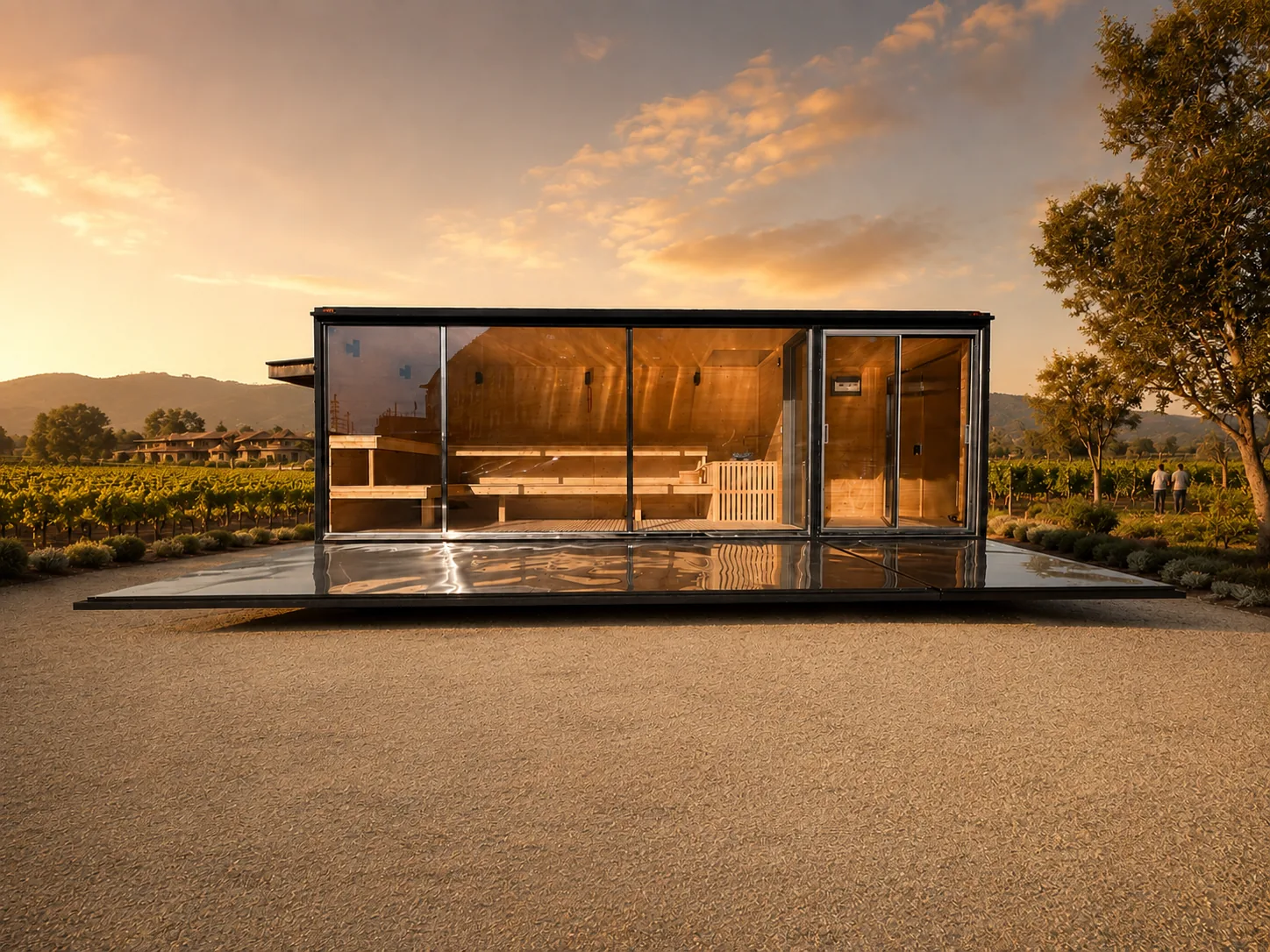
A winery or tourism venue should design a sauna as a complete bookable experience: a clear promise, defined guest, accurate pre-arrival information, safe and accessible arrival, changing and privacy arrangements, controlled heat session, cooling and hydration, a natural connection to the venue, trained staff, measurable operations and evidence-based marketing. The trailer or pavilion is one component; the guest journey determines whether the concept is coherent.
A beautiful sauna can still become a weak tourism product if guests do not understand what to book, where to go, what to bring or what happens afterwards. Conversely, a simple, well-managed experience can feel premium when every transition has been considered.
Tourism Western Australia describes experience development as creating market-ready, bookable experiences through business planning, risk analysis, itinerary development, competitor research, budgeting, forecasting, stakeholder engagement and approvals. That is the right frame for a commercial sauna project: the hardware supports an experience, but it does not create one on its own.
Define the experience promise
Write one sentence explaining what the guest is buying. Avoid broad claims such as “ultimate wellness” or “detox”. A stronger promise describes the setting and sequence without guaranteeing a health outcome: for example, a private heat-and-cool session overlooking the vineyard, followed by a quiet reset and an optional food or beverage experience.
Then identify the guest segment. Couples on a weekend stay, small groups, conference delegates, local members and tour groups have different needs. Define the booking party size, age policy, required supervision, session rhythm and whether the experience is private, shared or exclusive-use.
Use market research rather than assumptions. The Australian Government’s market-research guide suggests examining customer needs, willingness to pay, usage, competitors and location. Interview likely guests, test messages, review comparable experiences and record what evidence would justify the next stage.
Map the guest journey end to end
Create a journey map from first discovery through follow-up:
- Discovery: what does the image and description promise?
- Booking: are price, duration, inclusions, exclusions and cancellation terms clear?
- Pre-arrival: what should the guest bring, avoid or disclose?
- Arrival: can the guest find parking, reception and the sauna path?
- Welcome: who checks the booking and explains the experience?
- Changing and storage: where are belongings secured and privacy maintained?
- Session: how is time, capacity, conduct and temperature controlled?
- Cooling and hydration: where does the transition happen safely?
- Venue connection: what is the next part of the visit?
- Follow-up: what feedback is requested and how is consent handled?
Walk the journey in daylight, after dark and during the venue’s busiest period. Look for conflicts with vehicles, cellar-door traffic, events, accommodation check-ins and deliveries.
Design for confidence before arrival
Clear information is part of the product. Tourism WA’s accessible and inclusive tourism guidance emphasises up-to-date information that helps visitors plan with confidence and recognises a broad range of access needs.
Publish factual information about the approach, surfaces, gradients, steps, doorways, seating, lighting, assistance, toilets, change facilities, sensory environment and communication options once those details are verified. Do not use “fully accessible” as a blanket claim without a proper review.
Offer a practical contact channel for guests who need additional information. The goal is not to promise that every configuration suits every person; it is to provide enough accurate information for informed planning and to identify reasonable alternatives.
Integrate the venue without forcing it
The sauna should belong to the location. At a winery, that may mean landscape views, seasonal timing, a calm relationship with cellar-door operations and a carefully separated beverage offer. At accommodation, it may connect to check-in, robe or towel provision, room packages and evening quiet periods. At a nature-based venue, environmental conditions and land-management responsibilities are central.
Avoid adding unrelated inclusions simply to make the package sound larger. Every element should support the promise and be operationally deliverable. Alcohol, food, transport and high-temperature experiences require especially clear sequencing and competent advice; do not imply that alcohol and sauna use are automatically compatible.
Build the operating blueprint
Behind the guest journey is a service blueprint showing staff actions, systems and evidence. Define booking ownership, capacity control, induction, cleaning, linen, consumables, incident response, fault isolation, opening and closing duties, supplier contacts and records.
The blueprint should answer:
- Who has authority to delay or cancel a session?
- How are weather, fire, power or access issues communicated?
- Where is the current operating procedure stored?
- How is a fault recorded and escalated?
- Who checks cleaning and reset completion?
- How are privacy and marketing consent handled?
- What happens if the main venue closes while a session is active?
Use the existing commercial operating-procedures guide to structure the operational work, then adapt it to the actual venue and professional advice.
Package and price with transparent assumptions
Possible formats include a stand-alone session, accommodation add-on, private group booking, seasonal membership, retreat inclusion or corporate package. Each should have a defined duration, inclusions, staffing requirement, reset time and cancellation policy.
Model contribution rather than headline revenue. Include booking fees, staffing, utilities, cleaning, linen, consumables, maintenance, replacement reserves, marketing, insurance, downtime and any revenue share. Use conservative, base and stretch assumptions and show the decision-maker which variables matter most.
Do not publish an earnings promise. The question “Can a winery make money from a bookable sauna experience?” has a conditional answer: it may produce a positive contribution when verified demand, achievable pricing and utilisation exceed the full incremental cost and risk of delivery. Only a venue-specific model and pilot can test that.
Run a controlled pilot
A pilot should answer commercial and operational questions, not simply generate attractive photos. Define the period, guest segment, available sessions, promotion method, booking rules, success measures and stop criteria.
Measure:
- page visits to booking starts;
- booking conversion and abandonment;
- attendance, cancellation and no-show rates;
- peak and off-peak utilisation;
- session turnaround and staff time;
- cleaning and consumable cost;
- faults, downtime, incidents and complaints;
- guest comprehension of pre-arrival information;
- access requests and barriers;
- satisfaction, repeat intent and referral source;
- verified revenue and incremental contribution.
Keep forecasts, targets and actual results in separate columns. Review the pilot with operations, finance, marketing and safety stakeholders before scaling.
Market the experience accurately
The ACCC states that product and service information, images, benefits, performance, price and delivery statements must be accurate and based on reasonable grounds. Apply this to every listing and partner description.
Use real photographs of the actual system or label concepts clearly. State limitations and booking conditions prominently. Avoid unsupported medical, detoxification, immunity, recovery, weight-loss or guaranteed-relaxation claims. If a partner republishes the offer, provide a controlled fact sheet so old or exaggerated copy does not spread.
Common experience-design mistakes
- Designing the sauna before defining the guest and booking promise.
- Hiding practical access information behind aspirational photography.
- Ignoring changing, storage, cooling, hydration and privacy.
- Overloading the package with inclusions that complicate staffing.
- Selling all day while demand is concentrated in a narrow window.
- Combining alcohol and heat without competent risk advice and clear policies.
- Treating concept images or forecasts as evidence of a live experience.
- Collecting feedback without consent or a plan to act on it.
- Scaling before measuring turnaround, maintenance and downtime.
A practical decision checklist
Before moving to detailed design, confirm that the venue has a defined promise, target guest, journey map, access information plan, site concept, authority and adviser list, operating blueprint, budget scenarios, evidence rules and pilot scorecard. Mark every missing item with an owner and due date.
Mobile Sauna Systems supplies commercial relocatable sauna and recovery concepts for venue discussions. Exact scope, dimensions, utilities, capacity and delivery conditions must be confirmed through approved project documentation.
Frequently asked questions
What makes a winery sauna experience market-ready?
It needs a clearly described and bookable promise, verified site and access information, consistent operations, trained people, accurate claims, suitable risk controls, a coherent venue connection and evidence that the target guest values it.
Should the sauna session include wine?
Do not assume so. Heat, hydration, alcohol service, guest safety and responsible-service obligations require competent advice and careful sequencing. A non-alcoholic or separately timed venue experience may be more appropriate.
How should a tourism venue test demand?
Interview target guests, test landing-page messages, use waitlists or expressions of interest responsibly, compare alternatives and run a controlled pilot with defined measures. Interest is not the same as paid, repeatable demand.
What accessibility information should be published?
Publish verified details about the path, surfaces, gradients, steps, doors, seating, toilets, change facilities, sensory conditions, assistance and booking contact. Avoid blanket claims that have not been reviewed.
Can concept imagery be used?
Yes, if it is clearly labelled and does not misrepresent the product, site or completed work. Real product and installation photography is stronger evidence when available and approved.
How do we discuss a venue concept?
Prepare the guest journey, site facts and operating assumptions, then start a commercial enquiry or call 0432 394 901.
Sources and limitations
- Tourism Western Australia — Experience Development
- Tourism Western Australia — Accessible and inclusive tourism
- Australian Government — Do market research
- ACCC — False or misleading claims
This guide provides general commercial planning information. It is not approval, legal, medical, engineering, responsible-service, accessibility, financial or insurance advice.
Plan your commercial system
Start with your venue, audience and operating goal.
Tell Mobile Sauna Systems about the proposed site and commercial opportunity so the right questions can be framed for a qualified project discussion.
This article provides general information only and is not medical, legal, planning, engineering or financial advice. Requirements vary by project and jurisdiction. Seek appropriately qualified advice for your circumstances.