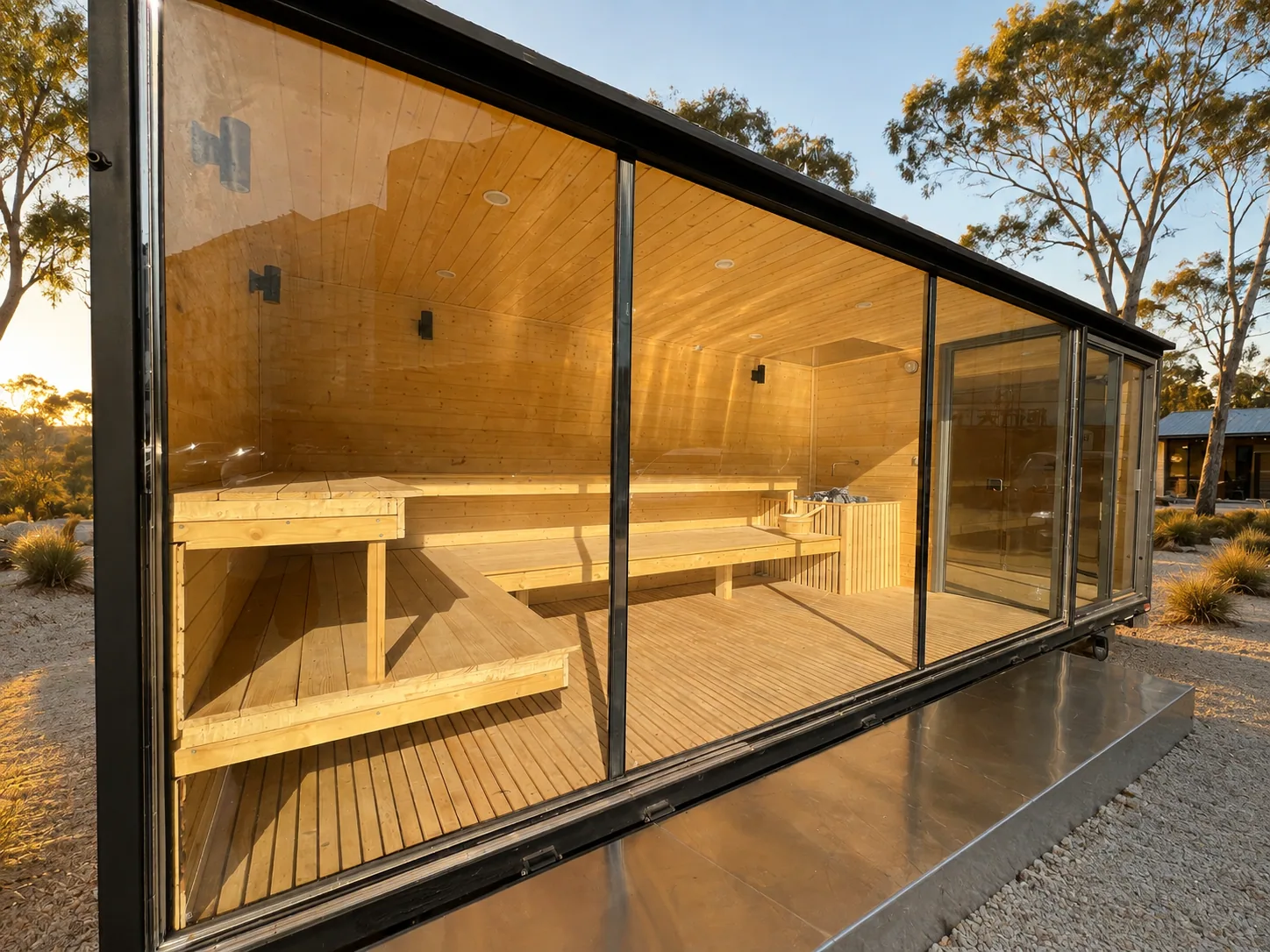
A seasonal move plan treats every relocation as a controlled project. Confirm the destination site, route, vehicle and load requirements, utilities, access, approvals, responsibilities, weather window, shutdown, transport, placement, commissioning and reopening before committing to a date. Keep a movement record and require a fresh site-specific review; a successful previous move does not prove the next site is suitable.
Relocatability can create commercial flexibility, but it does not make movement automatic. A sauna or recovery pavilion may operate at one venue in summer and another in winter, travel between tourism sites, or support events. Each destination can introduce different surfaces, gradients, access routes, utilities, hazards, planning conditions and guest flows.
This framework is for owners and venues planning the decision process. Transport, vehicle, engineering, planning, building, electrical, plumbing, fire, accessibility, workplace-safety and insurance requirements need advice from the relevant authorities and competent professionals.
Define the seasonal operating model
Write down why the asset is moving, when each operating season starts and ends, who owns the asset, who operates it and what outcome makes the relocation worthwhile. Identify the expected closed period, set-up window, storage needs and minimum trading period at each site.
Avoid treating forecast bookings or revenue as facts. Separate targets, assumptions and verified results. The commercial KPI guide can help venues define measures before the season begins.
Create a destination site gate
No move date should be confirmed until the destination site passes a documented gate. Record:
- legal control of the site and landlord or venue permissions;
- planning, building and other approval advice;
- measured approach width, height, gradient and turning areas;
- ground condition, placement method and support requirements;
- separation from traffic, vegetation, structures and guest circulation;
- electrical supply and connection responsibility;
- water, drainage and wastewater arrangements where relevant;
- emergency access, lighting, security and weather exposure;
- accessible approach, information and service alternatives;
- maintenance and service access after placement.
Use dated photographs and a measured plan. Mark every unknown as unresolved. The site-requirements guide provides a broader planning checklist.
Confirm transport configuration
Document the exact transport configuration, including approved dimensions, mass, axle or coupling information, removable or secured components and the towing or carrying vehicle requirements. These facts must come from approved documents and qualified advice, not website estimates.
The National Transport Commission’s Load Restraint Guide states that a transported load should be properly restrained, not dangerously overhang, stay within mass limits and not obscure required lights or plates. Applicable rules differ by vehicle and jurisdiction. Confirm the relevant requirements for the actual movement.
Survey the route and arrival sequence
Route planning extends beyond choosing a map direction. Check road restrictions, bridge and overhead clearances, gradients, turning points, gates, vegetation, delivery-hour limits, traffic conditions, permits and safe waiting areas. Confirm who has authority to stop or control site traffic.
At the venue, rehearse the arrival sequence on paper: entry, spotter positions, turning, reversing, placement, vehicle exit and exclusion zones. A route that works for a car may not work for the actual combination.
Build a shutdown checklist
Before movement, close the previous site through a signed checklist:
- stop bookings and communicate the final operating session;
- cool down and isolate equipment using approved procedures;
- clean and dry relevant areas;
- inspect for damage, faults and loose items;
- remove or secure accessories in the documented transport configuration;
- disconnect utilities through authorised persons;
- record meter, control and equipment status where relevant;
- photograph the asset and site;
- secure doors, glazing, steps and external items as specified;
- complete a departure sign-off.
Do not improvise shutdown steps. Use manufacturer or supplier documentation and competent trades where required.
Assign roles for movement day
Name a movement coordinator, driver or transport provider, site controller, spotter, technical recommissioning contact and venue decision-maker. Define who can stop the move. Exchange contact numbers and agree on weather, access or safety triggers that postpone the operation.
A responsibility matrix should cover permits, traffic management, utility isolation, load and vehicle checks, route confirmation, keys, site access, placement, waste removal, commissioning and reopening approval.
Prepare the destination before departure
The new site should be ready before the asset leaves the previous location. Confirm that ground and utility works are complete, approach routes are clear, contractors are booked, placement markings are visible and the exclusion zone can be maintained.
The delivery and placement checklist helps structure the pre-arrival check. A checklist is not an approval; use site-specific professional advice.
Control placement and connection
On arrival, pause if conditions differ from the plan. Rain, soft ground, parked vehicles, changed access, incomplete electrical work or an obstructed emergency route can invalidate assumptions.
Place and support the unit only using approved procedures. Connections should be made and tested by authorised people. Keep guests and non-essential staff outside the movement and commissioning zone.
Commission before reopening
Relocation is not complete when the transport vehicle leaves. Use a commissioning and restart record covering:
- placement and support check;
- utilities connected and tested;
- equipment inspection after transport;
- control, alarm and safety-function tests specified by the supplier;
- ventilation, lighting, doors and access paths;
- cleaning and water systems where relevant;
- emergency information and operator instructions;
- maintenance or fault issues;
- photographs and sign-offs;
- authorisation to accept bookings.
Safe Work Australia’s model code for managing risks of plant highlights installation, commissioning, operation, inspection, maintenance, transport, storage and dismantling as lifecycle stages. The move plan should connect them.
Rebuild the guest journey
Even when the asset is unchanged, the guest experience changes with the site. Walk the complete journey from parking or reception to check-in, changing, sauna use, cooling, hydration, toilets and departure. Review privacy, slip and trip risks, signage, lighting, weather shelter, staff sightlines and emergency access.
Tourism Australia’s accessible tourism resources encourage businesses to assess accessibility and provide useful visitor information. Describe actual access conditions clearly and avoid claiming universal accessibility without evidence.
Keep a seasonal movement record
For every move, retain the site assessment, route plan, approvals, transport documents, photographs, defects, utility certificates or records, commissioning checklist, training updates and opening authorisation. Record what changed and what should improve next time.
Review the plan after the first operating week. Compare expected and actual set-up time, faults, guest questions, staff workload and site issues. Update the controlled checklist without erasing the historical record.
Common seasonal-move mistakes
- Assuming prior movement proves the next route or site is suitable.
- Confirming public opening dates before site and approval gates pass.
- Using estimated dimensions or mass.
- Leaving route checks until movement day.
- Treating arrival as completion without recommissioning.
- Failing to secure loose equipment or document transport configuration.
- Ignoring weather, surface changes and guest circulation.
- Reopening before operators receive site-specific information.
A practical go-or-hold decision
Use a final gate 24 to 48 hours before movement, then reconfirm on the day. The answer should be go, hold or cancel. A hold is appropriate when route, weather, site, utility, equipment, documentation or staffing conditions are unresolved.
The commercial benefit of movement comes from repeatability. A controlled process protects that flexibility better than an improvised one.
Frequently asked questions
Does a relocatable sauna need a new site check every time?
Yes. Access, ground, utilities, hazards, approvals and guest flow can differ at every destination and can change between seasons.
Who should approve the route?
The responsible operator should obtain advice from the appropriate transport provider, authorities and competent specialists for the actual vehicle, load and jurisdiction.
Can bookings open before commissioning?
Opening dates may be promoted cautiously, but operation should not begin until placement, connections, inspection, testing and handover requirements are complete.
What should travel inside the unit?
Only items allowed by the approved transport configuration and properly secured. Follow supplier, vehicle, load-restraint and professional guidance.
What records should be kept?
Keep site and route checks, approvals, movement documents, photographs, defects, connection and commissioning records, training updates and the reopening authorisation.
Can Mobile Sauna Systems help plan a seasonal move?
Mobile Sauna Systems can discuss the commercial concept and information required for a project conversation. Start an enquiry or call 0432 394 901.
Sources and limitations
- National Transport Commission — Load Restraint Guide
- Safe Work Australia — Managing risks of plant in the workplace
- Tourism Australia — Accessible tourism
This is a planning framework, not transport, engineering, legal, approval, safety, accessibility, financial, medical or insurance advice.
Plan your commercial system
Start with your venue, audience and operating goal.
Tell Mobile Sauna Systems about the proposed site and commercial opportunity so the right questions can be framed for a qualified project discussion.
This article provides general information only and is not medical, legal, planning, engineering or financial advice. Requirements vary by project and jurisdiction. Seek appropriately qualified advice for your circumstances.